

Texas A&M fans well remember the frustrations of last year's weekly CFP rankings, as the committee, nearly on a weekly basis, contradicted itself in the reasoning it used from team to team. This ended up costing the Aggies quite a bit, as it led to their eventual matchup with the national runners-up, Miami, rather than a game against a team like JMU or Tulane in the first round.
Even though the Aggies are nowhere near the rankings this year, of course, given the way this season has gone, fans can look at what went on in last night's initial CFP rankings and see some familiar trends. There were some clear divergences from the AP Poll in the rankings, and most of the changes were explained very poorly.
BREAKING: Initial College Football Playoff Ranking🚨https://t.co/qbML5lQgjb pic.twitter.com/4fr27wLSFh
— On3 (@On3) November 4, 2026
This has been a chaotic year so far, of course, but as regards the SEC, there are some huge issues here that you can see just from the top 15 in these rankings. The head to head results are all over the place in this ranking, and the explanations given only further belie the complete incompetence this committee is putting out there.
CFP committee is once again egregiously mismanaging the rankings
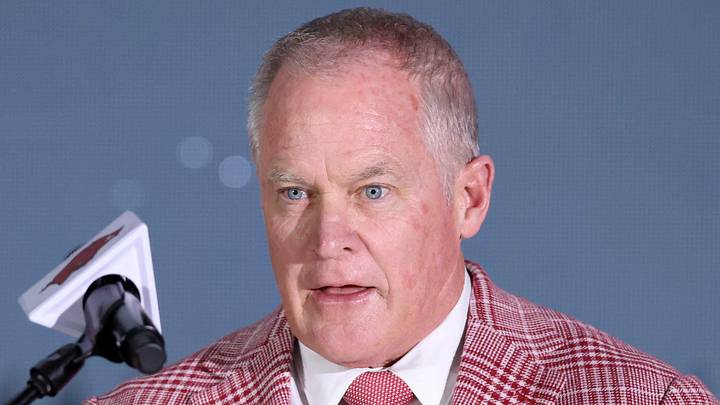
2-loss Alabama is ranked up at 5th, ahead of 1-loss Kentucky, and it's difficult to figure out exactly why— especially when you throw in the monkey wrench of 13th-ranked, 2-loss Tennessee. When asked about the strategy of putting Alabama ahead of Kentucky, Hunter Yurachek— Arkansas AD and committee spokesperson— had this to say.
"[T]he head-to-head is weighted in the case of where we have Alabama and Kentucky, where they were a comparative part of our ranking process... Florida is currently 24th and Ole Miss is 10th. The head-to-head matchup between those teams is not going to come into play. You've got South Carolina at 21 and Tennessee at 13. Again that head-to-head matchup... is not going to come into play, just like the head-to-head matchup between Tennessee and Alabama is not going to come into play at this point because of where those teams were reviewed in the ranking process."Hunter Yurachek
I'm beginning to understand how some of the decisions made in the Arkansas AD have happened in the past number of years.
This is a completely baseless way to do the rankings, if the explanation given here is indeed what actually happened. Yurachek is basically saying that teams begin in a certain "tier," (the committee used the word "pod") and if they have a head-to-head result in that tier, then it will come into play— but it won't matter when it comes to teams in different tiers.
The clear eyebrow-raising moment here is that there's absolutely no reasoning given for why a team is in a given tier or not. Tennessee and Alabama both have two losses! Why are the Volunteers in a lower tier? The Vols beat the Tide very soundly at home, and their two losses are both to ranked teams.
Alabama has two losses to ranked teams as well, but they have a win over 6th-ranked Kentucky (and 21st-ranked South Carolina) that is buoying them right now. These are very comparable resumes at the moment— so why are the Volunteers so far down compared to the Tide?
Yurachek mentioned something about the road win at Mississippi State being a better win than the computers will give Alabama credit for given that Kamario Taylor was playing, but that's the game he got injured in. That alone does not explain this disparity.
This is only one example to focus on here, but it's symbolic of the egregious mismanagement of these rankings that the committee routinely engages in. If there's a formula that they're using, just say so! If it doesn't make sense, then change it! But transparency of that sort is something we're simply not going to get, apparently.
 Add us as a preferred source on Google