

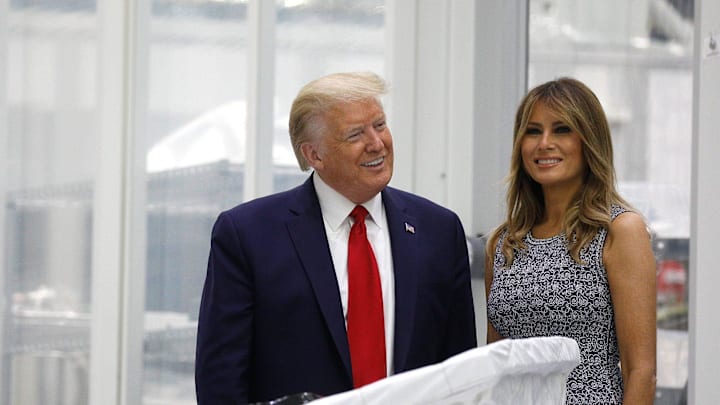
President Donald Trump has just signed an Executive Order, titled "Donald J. Trump Saves College Sports," that could be further muddying the waters in an already-tumultuous arena. The order, which has not yet been fully released, is meant to "protect student-athletes and collegiate athletic scholarships and opportunities... and the unique American institution of college sports," according to a fact sheet released by the White House.
This fact sheet covers that the act, though more expansive than regulating NIL in particular, will have some significant effects. The order contains language that "prohibits third-party, pay-for-play payments to collegiate athletes," but "does not apply to legitimate, fair-market-value compensation that a third party provides to an athlete, such as for a brand endorsement."
The order also aims to protect "women's and non-revenue sports," which is a point of fear for NIL naysayers— and with good reason, as we have seen several programs shutter such sports after their budgets become tighter since NIL's advent.
Donald Trump signs college sports executive order: How will Aggies be affected?
The main thing that seems to be a victory here for the NCAA is the direction for the National Labor Relations Board and the Secretary of Labor to "clarify the status of student-athletes," which means that they will be considered amateurs and not employees. That amateur status is how the NCAA has been able to prevent compensation from being given to these athletes for so long.
As the order correctly recognizes, there is a highly chaotic environment right now in college sports thanks to the repealing of many NCAA rules, conflicting NIL legislation, and other factors. However, it's questionable whether this specific act will help or harm in subduing that chaos.
Paying the players is a genie that can't really be put back in the bottle. Given the level of compensation that their participation in these sports (read: football) produces, I am not sure how well this order will be able to stand up if it goes to the Supreme Court.
What this means, most likely, is a whole bunch more lawsuits that college sports fans will have to follow closely over the next few years. If any schools are adversely affected, A&M will likely not be one of them: they have been rather controlled in their spending and haven't chased any bidding-war recruitments up until this point, while there are notable schools who have done so.
 Add us as a preferred source on Google